Sunday, 07 December 2025 12:26
Summary
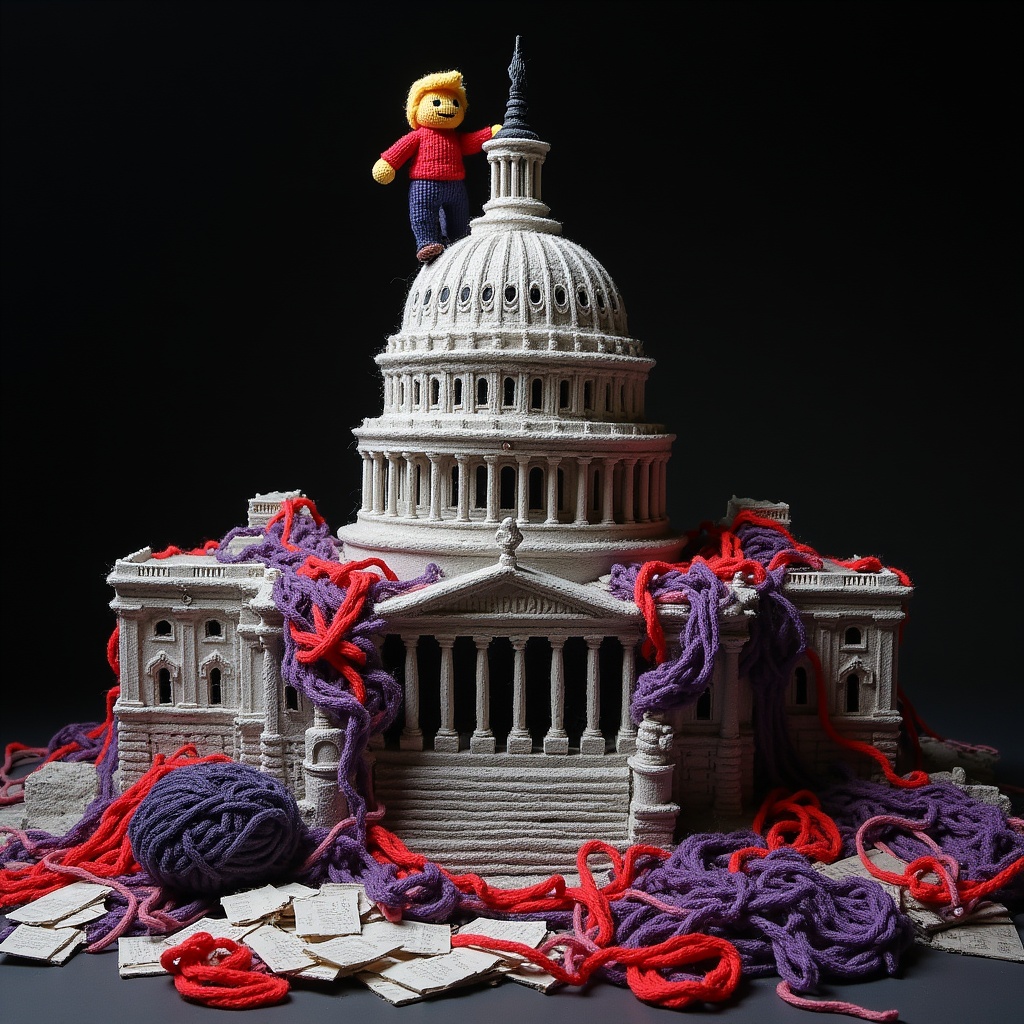
The Season 51 Christmas episode of Saturday Night Live, hosted by Melissa McCarthy, served as a cultural barometer for a nation grappling with dual crises: political dysfunction and unprecedented corporate consolidation. The broadcast, which aired on December 7, 2025, arrived just weeks after the longest government shutdown in United States history, a 43-day political stalemate that had furloughed hundreds of thousands of federal workers. The show’s political sketches, featuring James Austin Johnson’s portrayal of President Trump, dissected the partisan gridlock that had paralysed Washington over the expiration of Affordable Care Act subsidies. Simultaneously, the episode turned its satirical lens on the entertainment industry, specifically lampooning the recently announced $83 billion acquisition of Warner Bros. Discovery’s studio and streaming assets by Netflix. McCarthy’s return for her sixth hosting appearance provided a masterclass in comedic commitment, anchoring a broadcast that sought to find humour in the profound anxieties of a deeply polarised and rapidly changing world.
The Return of the Six-Timer
The broadcast of Saturday Night Live on December 7, 2025, marked the final episode before the Christmas break and the sixth time Melissa McCarthy had taken the stage as host16,19. Her return was highly anticipated, given her history of elevating the show’s material through her signature blend of physical comedy and deep character commitment19. McCarthy, a veteran of sketch and improv, possesses a peerless confidence that allows her to inhabit characters ranging from the boisterous to the subtly sad16. The episode benefited from a strong opening and monologue, which launched into a trio of sketches considered by many critics to be among the best of her appearances on the programme19. Her performance was a demonstration of her ability to wring a laugh from a simple look or gesture, often elevating even weaker material18. The host’s knack for heightening moments and introducing memorable characters was on full display, whether she was portraying a clingy woman at a supermarket cheese sample station or a misbehaving UPS delivery driver19. The episode’s success was particularly notable as it followed a period of intense national anxiety, providing a much-needed moment of collective catharsis16. The show’s writers were tasked with synthesising two of the year’s most significant and complex narratives: the political paralysis in Washington and the seismic shift in the global media landscape1,3. The resulting satire was a sharp reflection of a society struggling to process both political dysfunction and corporate scale9,12.
The Longest Winter of Discontent
The political backdrop to the December episode was dominated by the fallout from the 2025 United States federal government shutdown, which had only concluded weeks earlier1,5. The shutdown, which began on October 1, 2025, and lasted until November 12, 2025, became the longest in US history, extending for a total of 43 days1,5,11. The crisis was triggered by the failure of Congress to pass the necessary appropriations legislation for the 2026 fiscal year1,8. The primary point of contention was a deep partisan division over the extension of expanded Affordable Care Act (ACA) subsidies, which were scheduled to expire in November 20251,8. Senate Democrats repeatedly blocked the continuing resolution advanced by the Republican-controlled House of Representatives, insisting on the inclusion of the ACA subsidy extension to mitigate healthcare cost spikes1,8. The stalemate resulted in the furlough of an estimated 750,000 to 900,000 federal employees, while another 1.4 to 2 million were forced to work without pay1,5,8. The economic consequences were severe, with estimates projecting a $15 billion drag on US Gross Domestic Product for every week the government remained closed8. Essential services were disrupted, national parks were closed, and the scheduled release of critical economic data was delayed, creating a 'data void' for investors8,12. The shutdown finally ended when President Donald Trump signed a revised appropriations bill on November 12, following a bipartisan agreement that deferred the ACA subsidy issue to a vote in December1. The political satire in the SNL episode, particularly the cold open, focused on the absurdity and human cost of this prolonged gridlock4,6. James Austin Johnson’s impression of President Trump, which had already been deployed in earlier November episodes to mock the shutdown’s impact on grocery prices and flight cancellations, returned to dissect the political theatre of the resolution4,6. The show’s writers used the recent history of the shutdown to highlight the deep-seated polarisation that has made the routine function of government a perpetual crisis1,11. The satire underscored the public’s exhaustion with a political system where the failure to fund the government had become a recurring, and increasingly damaging, feature of the legislative calendar11,12.
The Streaming Leviathan's New Clothes
Beyond the political theatre of Washington, the episode also tackled the tectonic shifts occurring in the entertainment industry, specifically the massive corporate consolidation that had culminated in the Netflix acquisition of Warner Bros. Discovery (WBD) assets3,9. Just two days before the broadcast, on December 5, 2025, Netflix announced it had agreed to acquire WBD’s TV and movie studios and its streaming services in an $83 billion deal3,9. This transaction, which followed a bidding war that included Comcast and Paramount Skydance, was immediately hailed as one of the most significant media deals of the decade3,7. The deal was structured to acquire the content-generating and streaming parts of WBD, including the legendary Warner Bros. studios and the HBO Max streaming service3,7. WBD’s plan was to spin off its cable television channels, such as CNN and TBS, into a separate, standalone company called Discovery Global before the acquisition closed2,3. The merger was expected to reshape the global streaming landscape, giving Netflix ownership of two major streaming platforms and an unparalleled influence over the industry3. Netflix co-CEO Ted Sarandos stated that the combination would help the companies ‘define the next century of storytelling,’ a grand pronouncement that immediately became ripe for comedic deconstruction3. The show’s satire of the merger focused on the anxieties of creative talent and consumers alike, who feared the homogenisation of content and the potential for price increases10. The acquisition was seen as a turning point for Netflix, which had historically grown organically, and the $83 billion price tag, along with a substantial $5.8 billion breakup fee, signalled the company’s conviction in the deal’s success despite anticipated regulatory scrutiny7,9. The episode’s sketches on the merger likely explored the clash of corporate cultures, the fate of beloved intellectual property, and the sheer scale of the new entity, which would combine Netflix’s approximately 300 million global subscribers with HBO Max’s 128 million10. The comedic challenge was to translate the complex financial and regulatory details of a media merger into accessible, biting satire, a task the show embraced by personifying the corporate behemoths and their impact on the creative process9,10.
The Anatomy of a Political Impression
The political satire of the episode was a continuation of Saturday Night Live’s long-standing tradition of holding power to account, a role that has become increasingly central to its identity in recent years20. Melissa McCarthy’s own history with political impressions is legendary, most notably her Emmy-winning portrayal of former White House Press Secretary Sean Spicer during the first Trump administration17. Her commitment to the role, which involved aggressive physical comedy and a volatile temperament, set a high bar for political impersonation17. In the December 2025 episode, the political heavy lifting was primarily handled by James Austin Johnson, whose impression of President Trump is characterised by a stream-of-consciousness style that weaves together political grievances, pop culture references, and non-sequiturs4,6. Johnson’s Trump had already been the focus of the cold open in the November 8 episode, where he used a man’s collapse in the Oval Office as a springboard to monologue about the government shutdown and other political events6. The show’s approach to political comedy in Season 51, as demonstrated in the McCarthy-hosted episode, reflected a shift from the direct, confrontational style of earlier seasons to a more surreal and observational humour4,20. The satire often focused on the sheer exhaustion and absurdity of the political cycle, using the government shutdown as a metaphor for a system that has ceased to function13. The episode’s political sketches, including the cold open featuring Colin Jost as Defense Secretary Pete Hegseth, provided a commentary on the administration’s aggressive foreign policy and the perceived chaos within the White House18,19. Jost’s portrayal of Hegseth as a petulant, energy drink-chugging bully was a successful example of the show’s ability to find new targets for its political barbs19. The combination of McCarthy’s versatile comedic talent and the cast’s established political impressions allowed the programme to deliver a comprehensive satirical review of the year’s most pressing issues, from the halls of Congress to the boardrooms of Hollywood16,18.
Conclusion
The Season 51 Christmas episode, anchored by the formidable comedic presence of Melissa McCarthy, served as a powerful cultural document, capturing the zeitgeist of late 2025. The show’s ability to pivot seamlessly between the profound political failure of the 43-day government shutdown and the dizzying corporate scale of the $83 billion Netflix-WBD merger demonstrated its enduring relevance as a mirror to American life1,3,5. The satire of the shutdown, which had furloughed nearly a million federal workers, provided a necessary release valve for public frustration over the political system’s inability to perform its most basic function8,12. Simultaneously, the lampooning of the media merger addressed the growing public unease over the concentration of cultural power in the hands of a few streaming giants3,10. By placing these two monumental events side-by-side, the episode underscored a central theme of the era: that the forces shaping modern life—political gridlock and corporate consolidation—are equally vast and often equally absurd9,11. McCarthy’s performance, a blend of high-energy character work and subtle emotional depth, provided the necessary human anchor for a broadcast dealing with such complex, systemic issues16,19. The episode was not merely a collection of sketches; it was a comprehensive, if comedic, verdict on a year defined by a fractured republic and a rapidly remaking global entertainment industry7,9.
References
-
2025 United States federal government shutdown - Wikipedia
Used to verify the dates, duration (43 days), cause (ACA subsidies), and resolution of the 2025 US government shutdown, including the number of furloughed employees and the role of President Trump.
-
Warner Bros. Discovery-Netflix Merger: A Fair Arb Return If You Are Patient - Seeking Alpha
Used to confirm the WBD plan to split into Streaming & Studios and Global Networks (Discovery Global) before the Netflix acquisition.
-
Netflix Wins Bidding War For Warner Bros. Discovery With $83 Billion Deal - Investopedia
Used to verify the $83 billion deal size, the date of the announcement (Dec 5, 2025), the assets acquired (studios and streaming, including HBO Max), the spin-off of cable channels (CNN, TBS), and the quote from Ted Sarandos.
-
'We'll be doing Grinch': 'Trump' mocks government shutdown in SNL, promises to steal Christmas | Mint
Used to confirm James Austin Johnson's portrayal of Trump, the date of the earlier SNL episode (Nov 8, 2025), and the specific political topics satirised, such as the government shutdown and grocery prices.
-
Government Shutdowns: Causes and Effects - Brookings Institution
Used to confirm the 43-day duration of the 2025 shutdown, the number of furloughed employees, and the historical context of previous long shutdowns.
-
'SNL': Trump Whines About Mamdani Election, Government Shutdown Fallout in Cold Open | Video - TheWrap
Used to confirm the content of the November 8, 2025, cold open, including James Austin Johnson's Trump monologue and the use of a man collapsing in the Oval Office as a satirical device.
-
How Netflix won Hollywood's biggest prize, Warner Bros Discovery - CNA
Used to confirm the $72 billion (or $83 billion) deal value, the competitive bidding process (Paramount Skydance, Comcast), the significant regulatory review, and the $5.8 billion breakup fee.
-
US Government Shutdown 2025: Economic & Market Impact - Validus Risk Management
Used to detail the cause of the shutdown (ACA subsidies), the number of furloughed workers (750,000), and the economic impact, including the $15 billion drag on US GDP per week and the delay of economic reports.
-
Netflix & WBD: why now and what next? | News - Broadcast
Used to confirm the $83 billion deal size, the turning point for Netflix's strategy (moving from builder to buyer), and the context of industry consolidation.
-
Netflix and Paramount Both Stand to Lose If Netflix Wins the Warner Bros. Auction: (2025-12-05) - Morningstar
Used to provide subscriber numbers for Netflix (300 million global) and HBO Max (128 million global) to illustrate the scale of the combined entity, and the concerns about content licensing and revenue decline.
-
The 2025 government shutdown is the longest in US history - USAFacts
Used to confirm the 2025 shutdown as the longest in US history, the start date (October 1), and the core debate over the extension of the pandemic-era premium tax credit expansion (ACA subsidies).
-
Why is the 2025 U.S. government shut down? Full impact explained: national parks, Social Security, USPS, military pay, key services — and when will Washington reopen? - The Economic Times
Used to confirm the start date (October 1, 2025), the cause (dispute over healthcare subsidies), and the impact on services and financial markets (delayed economic reports).
-
Weekend Update: The Government Shutdown, Israel and Hamas Peace Deal - SNL - YouTube
Used to confirm SNL's immediate satire of the shutdown in the October 2025 episodes and the general theme of political exhaustion.
-
Six-Time SNL Host Melissa McCarthy's Is Low-Key Delightful - LateNighter
Used to confirm Melissa McCarthy's sixth time hosting, the date (Dec 7, 2025), her comedic style, and the overall positive reception of her performance.
-
Sean Spicer Returns (Melissa McCarthy) - SNL - YouTube
Used to confirm Melissa McCarthy's iconic and Emmy-winning portrayal of Sean Spicer, establishing her history with political satire.
-
Melissa McCarthy SNL Sketches Ranked: Hegseth Plays at War, Drunk Raccoon Loses It, and Holidays Get Dark - TooFab
Used to confirm the quality of McCarthy's performance, her ability to elevate material, and the inclusion of Colin Jost as Pete Hegseth in the cold open.
-
Melissa McCarthy shows why she's a repeat 'SNL' host, and Pete Hegseth returns in cold open - Los Angeles Times
Used to confirm the date (Dec 6/7, 2025), McCarthy's sixth time hosting, the success of the cold open featuring Colin Jost as Defense Secretary Pete Hegseth, and details of her sketches (UPS driver, cheese sampler).
-
How has SNL's approach to political satire evolved from the early days to now? - Quora
Used to provide context on SNL's political satire evolution, noting the shift from earlier styles to the current, more agenda-driven approach, and mentioning McCarthy's Sean Spicer impression.